Microsoft Fabric Data Agent Implementation Services
Build and deploy secure, governed Microsoft Fabric Data Agents with Folio3.
We help organizations assess Fabric readiness, prepare data and semantic models, configure AI Data Agents, validate answer quality, integrate with Microsoft Foundry and Copilot experiences, and scale conversational analytics across the enterprise.
Which sales regions are below their gross-margin target this quarter, and what caused the change from last quarter?
2 of 4 regions are below target. West shows the largest gap versus last quarter, driven mainly by lower-margin product mix.
North
East
South
West
Row-level security applied Verified measure
Microsoft Fabric Data Agents Overview
What Are Microsoft Fabric Data Agents?
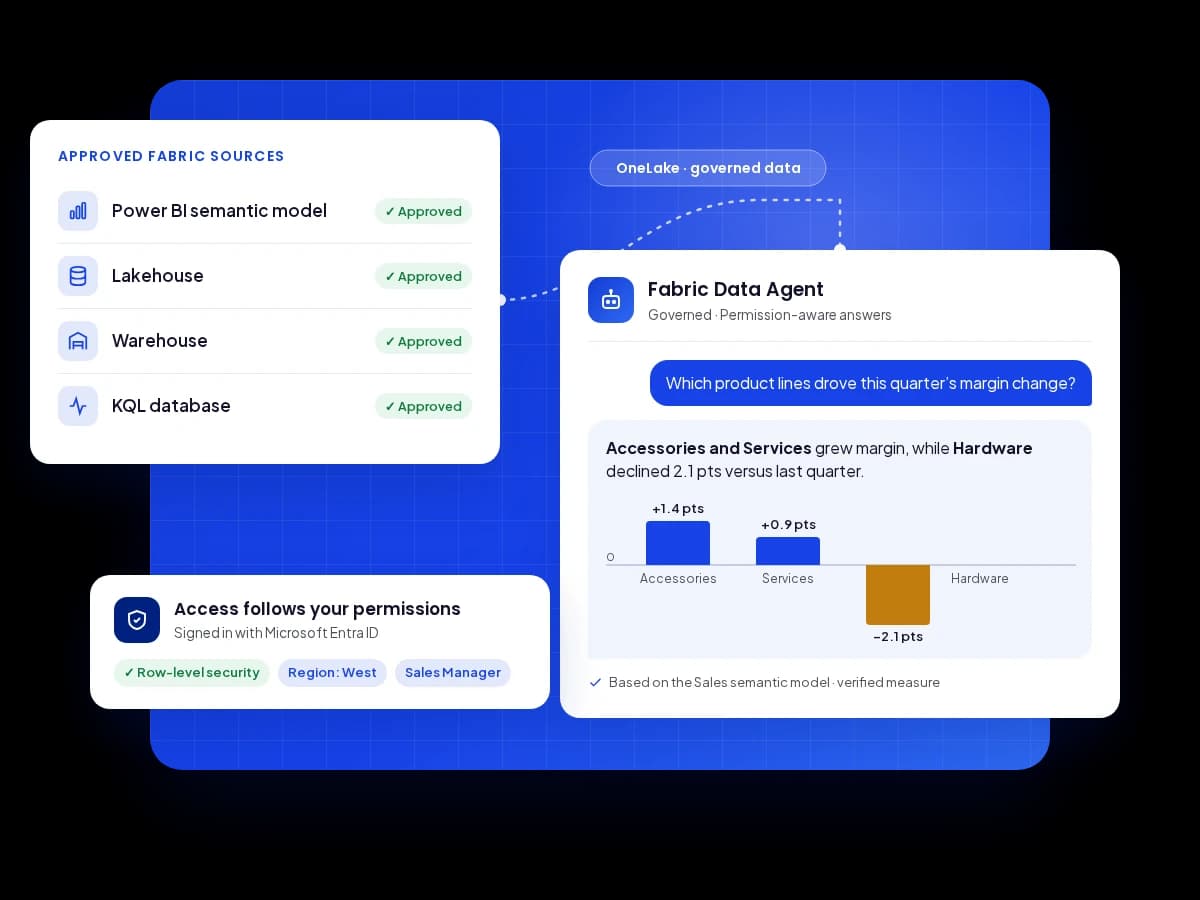
Microsoft Fabric Data Agents are AI-powered conversational experiences that allow authorized users to ask questions in natural language about governed enterprise data in Microsoft Fabric. They can use approved sources such as Power BI semantic models, Lakehouses, Warehouses, and KQL databases to return relevant answers while respecting access controls on the underlying data.
Fabric Data Agents can work with approved sources such as Power BI semantic models, Lakehouses, Warehouses, and KQL databases—using OneLake as the unified data foundation where applicable.
Folio3 implements Fabric Data Agents with the data foundation, semantic context, security, validation, integration, and managed support required for enterprise use.
Awards & Recognition
Quick Answers
Microsoft Fabric Data Agents at a Glance
Question
Direct answer
What do they do?
They enable users to ask natural-language questions about approved enterprise data in Microsoft Fabric.
Which data can they use?
Power BI semantic models, Lakehouses, Warehouses, and KQL databases.
Do they respect permissions?
Yes. Access follows the permissions applied to underlying Fabric data sources.
Where can users access them?
Microsoft Fabric, Microsoft Foundry, Copilot Studio, Teams, Microsoft 365 Copilot, and custom applications.
From Question to Decision
How AI Data Agents in Microsoft Fabric Turn Data Into Decisions
AI Data Agents in Microsoft Fabric allow teams to interact with governed data through everyday language. A finance leader can ask why gross margin changed. A sales leader can ask which accounts need attention. An operations manager can ask where inventory risk is increasing.
Reliable responses depend on curated data sources, semantic models, KPI definitions, business terminology, agent instructions, verified examples, and testing.
Example Business Question
“Which sales regions are below their gross-margin target this quarter, and what caused the change from last quarter?”
A Fabric Data Agent can:
1Identify approved sales, margin, and target data sources.
2Interpret terms such as “gross margin,” “target,” and “this quarter.”
3Apply the correct measures, time filters, and regional dimensions.
4Compare current performance with the prior period.
5Return a concise answer based on the user’s authorized data access.
6Point users to the relevant governed report or data view when applicable.
Build a Production-Ready Microsoft Fabric Data Agent With Folio3
Move from fragmented dashboards, reporting queues, and disconnected data sources to governed, natural-language answers from your Microsoft Fabric environment.
Folio3 helps you prepare the data foundation, configure the Data Agent, validate answer quality, integrate it with Microsoft and Azure experiences, and scale it securely across your organization.
What Folio3 Implements for Production-Ready Fabric Data Agents
Governed Data Sources
Connect the Data Agent to approved Power BI semantic models, Lakehouses, Warehouses, and KQL databases.
Semantic and Business Context
Define KPIs, measures, relationships, metadata, business definitions, terminology, and data ownership.
Agent Instructions and Example Queries
Configure agent behavior, data-source instructions, example business questions, source priorities, and rules for ambiguous requests.
Role-Based Security
Align Data Agent behavior with Microsoft Entra ID, source permissions, role-based access, row-level security, and column-level security.
Answer Quality Validation
Test real business questions, calculations, dates, filters, terminology, expected outputs, and access behavior before release.
Continuous Optimization
Monitor usage, refine business context, manage changes, test updates, and expand the agent into additional business domains.
Our Services
Microsoft Fabric Data Agent Implementation Services
Folio3 provides end-to-end implementation services for organizations that need more than a basic AI chat interface.
Fabric Data Agent Strategy and Use-Case Discovery
We begin by identifying the business domains, user roles, priority questions, data sources, and measurable outcomes that will create the greatest value from your Microsoft Fabric Data Agent.
What's included
✓Business use-case prioritization
✓Stakeholder and user-persona mapping
✓Priority-question and decision-workflow discovery
✓Data-source and integration review
✓Success metrics and acceptance criteria
✓Pilot and scale-up roadmap
Data Foundation and Semantic Model Readiness
We prepare the Fabric data sources and Power BI semantic models behind the agent so answers draw on trusted data, approved logic, and clear business definitions.
What's included
✓Fabric data-source selection and readiness assessment
✓Power BI semantic-model review and optimization
✓KPI, measure, relationship, and metadata validation
✓AI-ready schema, descriptions, and verified-answer setup
✓Data-quality, freshness, ownership, and lineage review
✓Business glossary and terminology alignment
AI Data Agent Design and Business Context
Folio3 designs AI Data Agents in Microsoft Fabric around the terminology, KPIs, data relationships, decision workflows, and domain expertise your teams already use.
What's included
✓Mapping business questions to approved Fabric sources
✓Agent and data-source instructions
✓Business terminology, synonyms, and date logic
✓Source priorities and domain boundaries
✓Response behavior and escalation paths
✓Ambiguous-question and edge-case testing
Microsoft Fabric Data Agent Development
We configure and implement Fabric Data Agents that align with your data sources, business rules, access model, and user requirements.
What's included
✓Data-source connections and Data Agent setup
✓Agent configuration and instruction implementation
✓Natural-language question experience design
✓Example-query and verified-answer configuration
✓User acceptance testing and documentation
✓Production deployment support
Microsoft Foundry and Copilot Integration
Extend governed Fabric intelligence beyond analytics workspaces by bringing trusted answers into the Microsoft and Azure experiences your teams already use.
What's included
✓Microsoft Foundry integration architecture
✓Copilot Studio connected-agent implementation
✓Microsoft Teams and Microsoft 365 Copilot experiences
✓Power Apps and custom application integration
✓Identity-aware access and user-context design
✓Deployment and adoption planning
Microsoft Foundry
Copilot Studio
Microsoft Teams
Microsoft 365 Copilot
Power Apps
Custom Applications
Governance, Security, and Access Controls
We align each Fabric Data Agent with the identity, permissions, data-governance, and compliance controls required for enterprise use.
What's included
✓Microsoft Entra ID and role-based access design
✓Source-level permissions and least-privilege validation
✓Row-level security and column-level security testing
✓Approved-source and domain-boundary controls
✓Sensitivity, lineage, auditability, and monitoring requirements
✓Security validation before production release
Answer Quality, Validation, and Optimization
A Data Agent should not move into production simply because it can generate a response. Folio3 validates whether it answers the right business question, uses the correct governed data, and respects the appropriate access controls.
What's included
✓Business-question test libraries
✓Expected-answer and source validation
✓KPI, measure, calculation, filter, and date-logic checks
Folio3 brings together Microsoft Fabric engineering, Power BI semantic modeling, Azure AI integration, security controls, answer-quality validation, and managed optimization in one implementation team.
We help organizations avoid the common mistake of connecting AI directly to unprepared data. Instead, we establish the governed data foundation, business context, access model, and testing process needed for trusted enterprise answers.
A Fabric Data Agent delivers greater value when it is available in the tools your employees already use.
Microsoft Fabric
Enable analysts, data teams, and business users to explore governed data through conversational questions inside the Fabric environment.
Microsoft Foundry
Use Fabric Data Agents as a governed enterprise-data capability within custom AI applications, broader agent workflows, and Azure-based solutions.
Microsoft Copilot Studio
Connect a Fabric Data Agent to a custom Copilot Studio agent so it can use governed enterprise data to ground its answers.
Microsoft Teams and Microsoft 365 Copilot
Bring conversational data insights to users in the Microsoft collaboration environments they work in every day.
Custom Applications and Portals
Embed permission-aware data conversations into internal portals, customer-facing applications, operational systems, and custom business workflows.
Available integration paths depend on Microsoft product availability, licensing, tenant settings, security configuration, and your organization’s approved architecture.
Readiness Assessment
Assess Your Microsoft Fabric Data Agent Readiness
Wondering whether your Fabric environment is ready for a Data Agent? Folio3 evaluates the data, semantic model, security, business context, and deployment requirements needed for a successful implementation.
1
Trusted Data Foundation
We assess data availability, quality, freshness, ownership, and suitability across your Microsoft Fabric environment.
2
Semantic Model Readiness
We review measures, relationships, metadata, KPI definitions, business language, report logic, and AI-ready data-model design.
3
Business Context
We define priority user questions, expected answers, terminology, approved sources, source priorities, and rules for ambiguous requests.
4
Security and Governance
We validate identity, user roles, source permissions, row-level security, column-level security, sensitive-data requirements, and governance controls.
5
Deployment and Adoption
We recommend the best experience layer, Fabric, Microsoft Foundry, Copilot Studio, Teams, Microsoft 365 Copilot, Power Apps, or a custom application, and define the rollout approach.
Conversational analytics in Microsoft Fabric gives each team governed answers to the questions it asks most.
“Why did operating expenses exceed budget in Q3?”
Finance and FP&A
Enable finance teams to ask questions about revenue, margin, expenses, cash flow, budget variance, forecast performance, and cost drivers using governed data and approved business metrics. Learn how Folio3 connects Azure, Fabric, and Copilot for financial planning.
“Which accounts need attention this month?”
Sales and Revenue Operations
Help sales leaders explore pipeline health, conversion rates, forecast variance, account performance, territory trends, and opportunities requiring attention.
“Where is inventory risk increasing?”
Supply Chain and Operations
Give operations teams faster visibility into inventory risk, fulfillment performance, supplier trends, production issues, delivery delays, and operational exceptions.
“Which issue types are driving escalations?”
Customer Service
Support service leaders with questions about case volume, resolution time, service-level performance, recurring issues, escalation trends, and customer experience.
“How did we perform versus last quarter?”
Executive Reporting
Allow leaders to ask clear business questions, compare periods, understand performance drivers, and identify the decisions requiring attention.
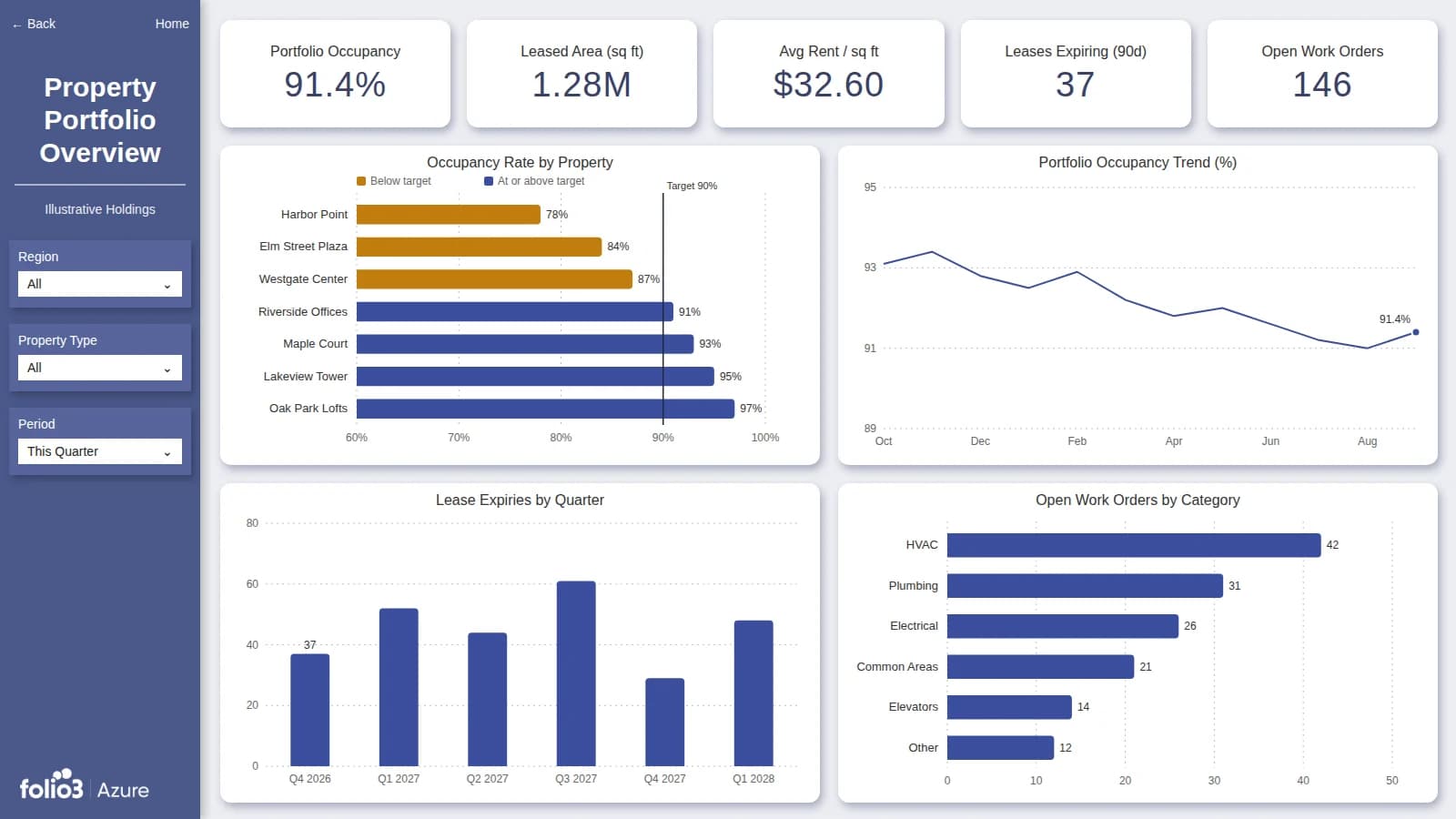
“Which properties have the lowest occupancy?”
Real Estate and Asset Operations
Surface portfolio, occupancy, maintenance, leasing, property operations, and financial insights through governed conversational analytics. Folio3’s Microsoft Fabric reporting work for Savills improved real-estate operational efficiency by 13%.
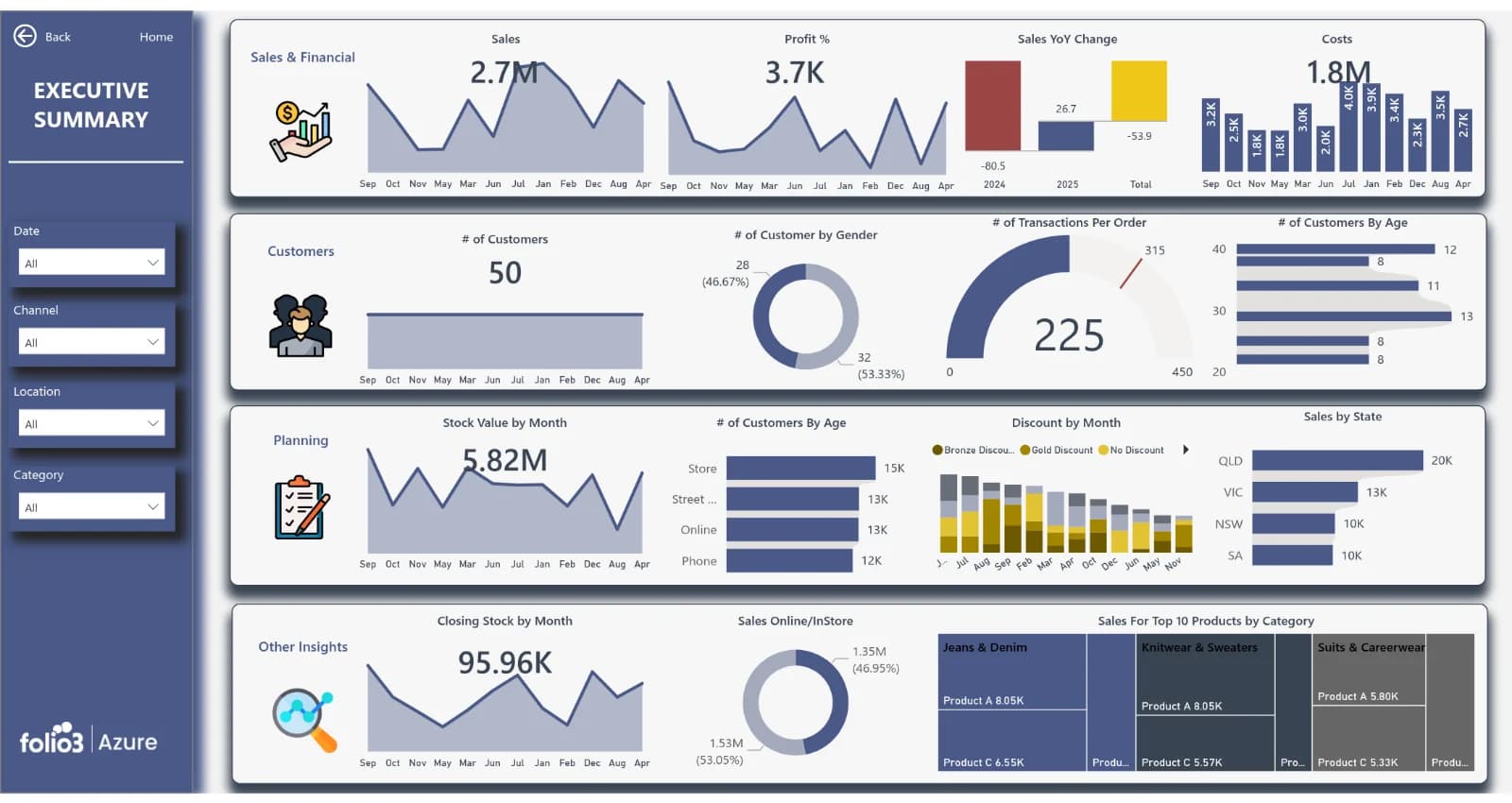
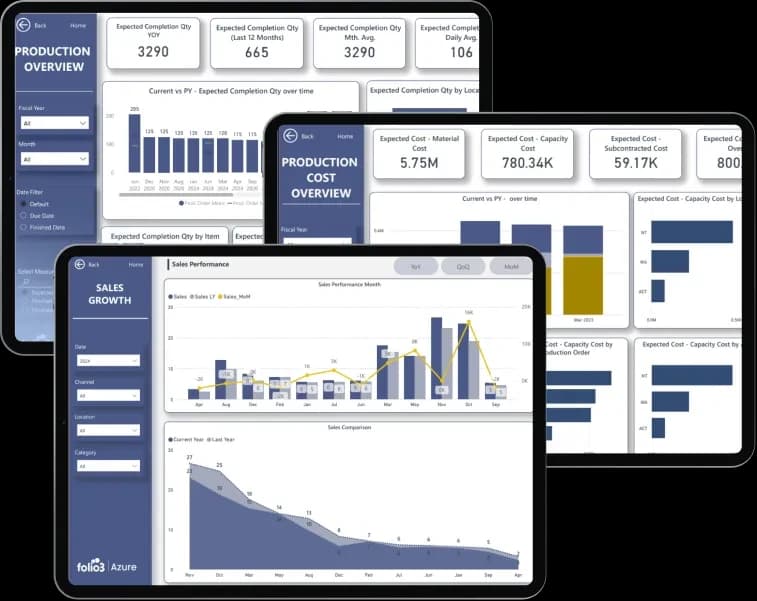
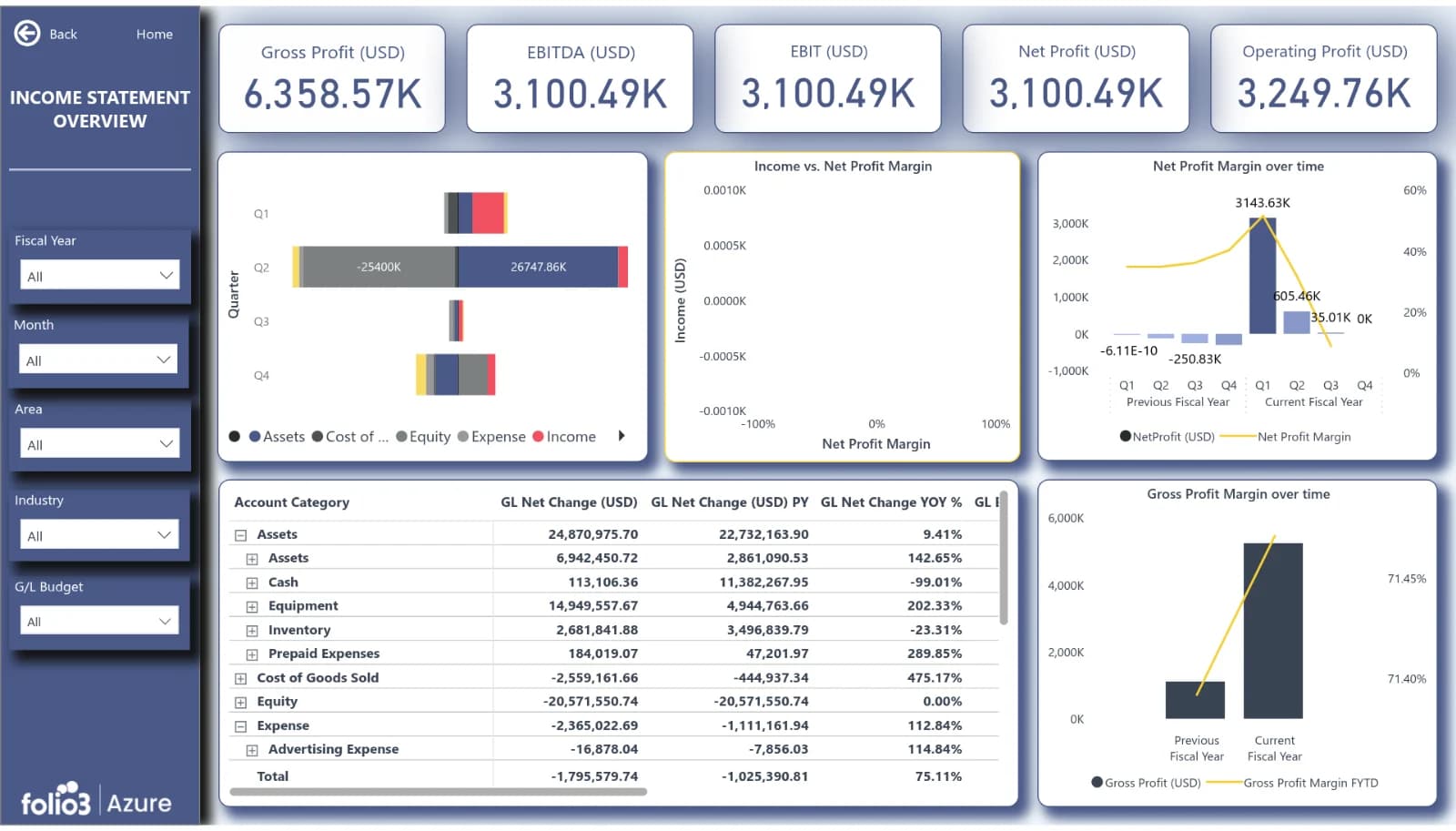
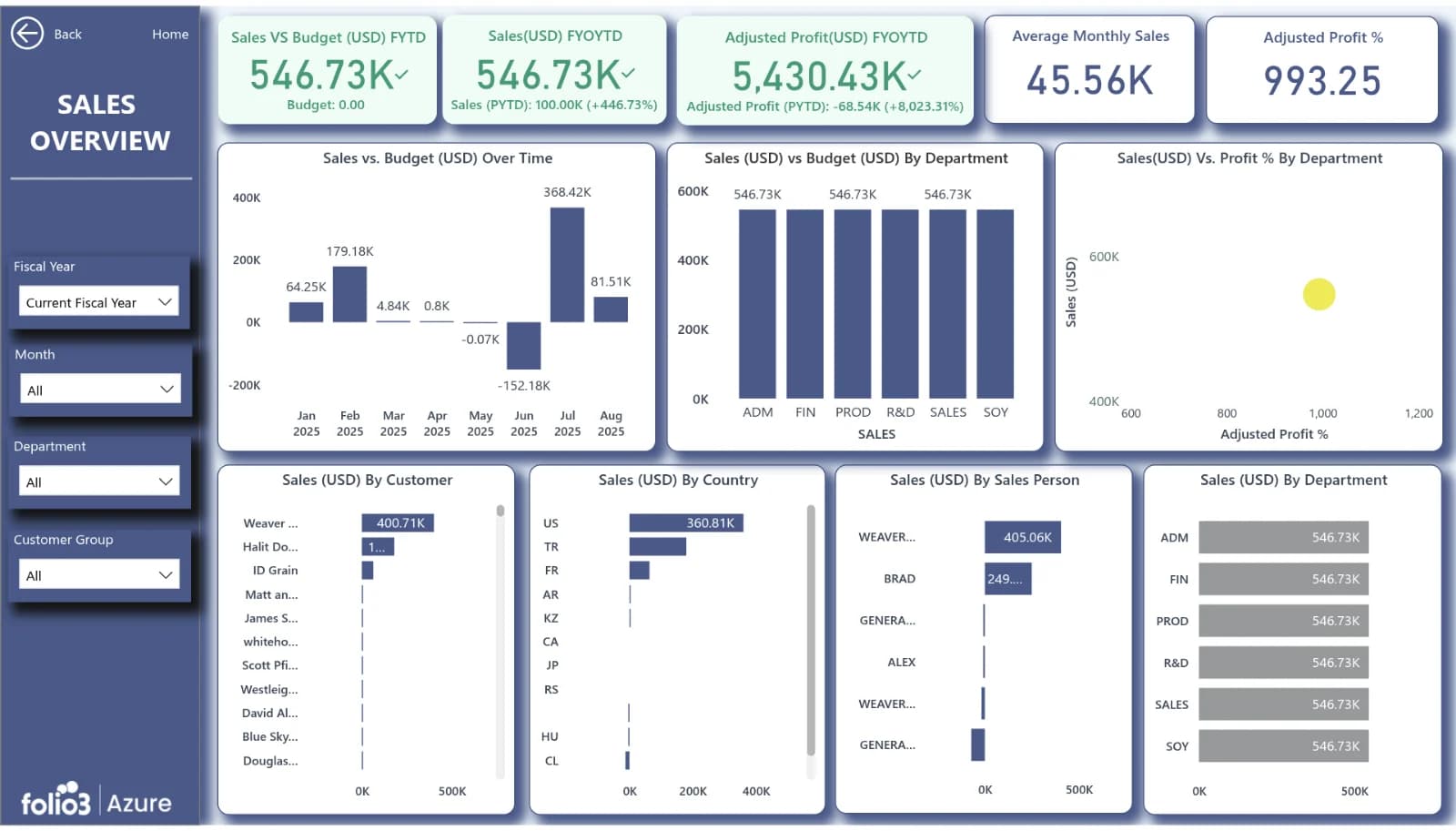
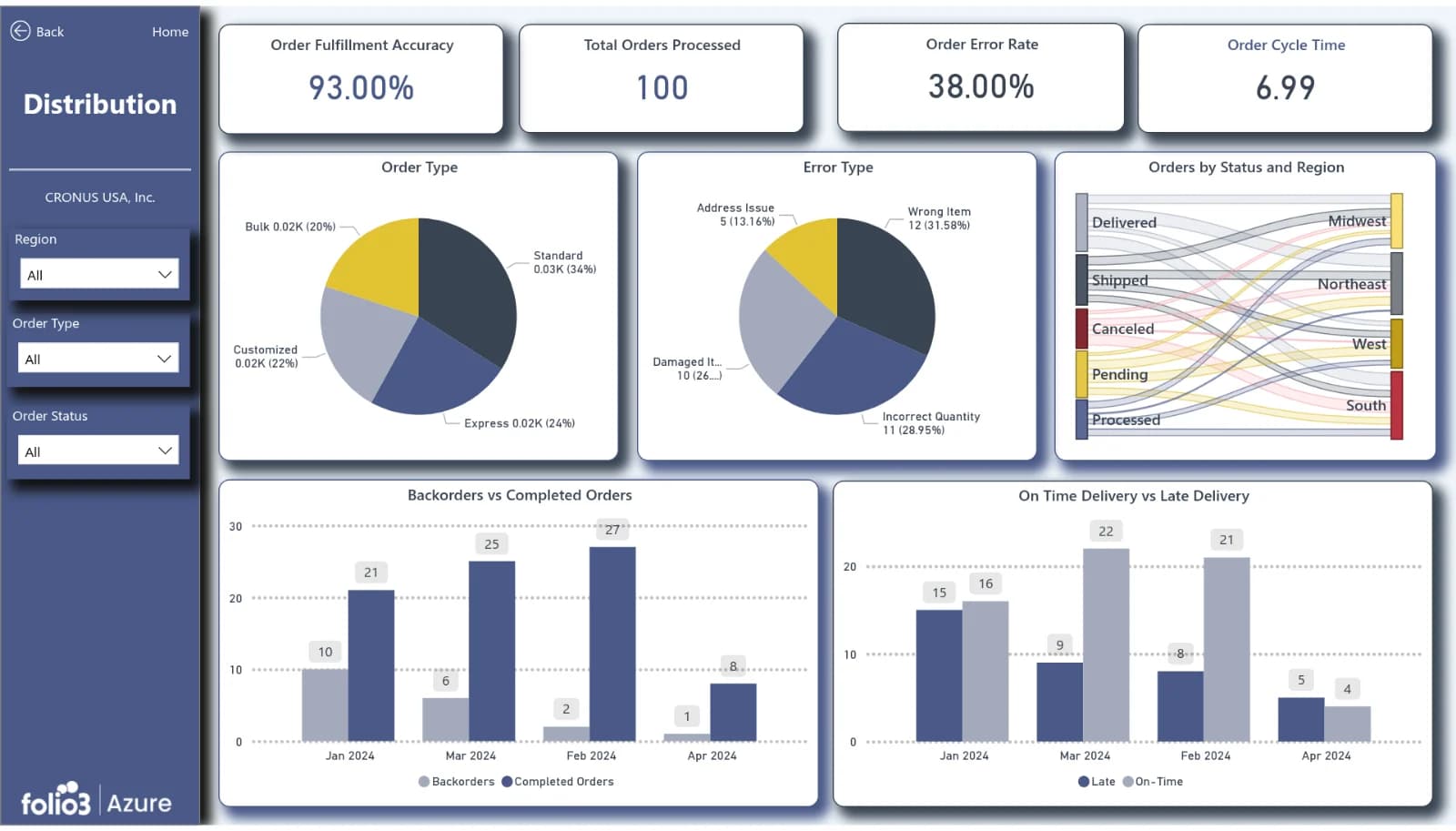
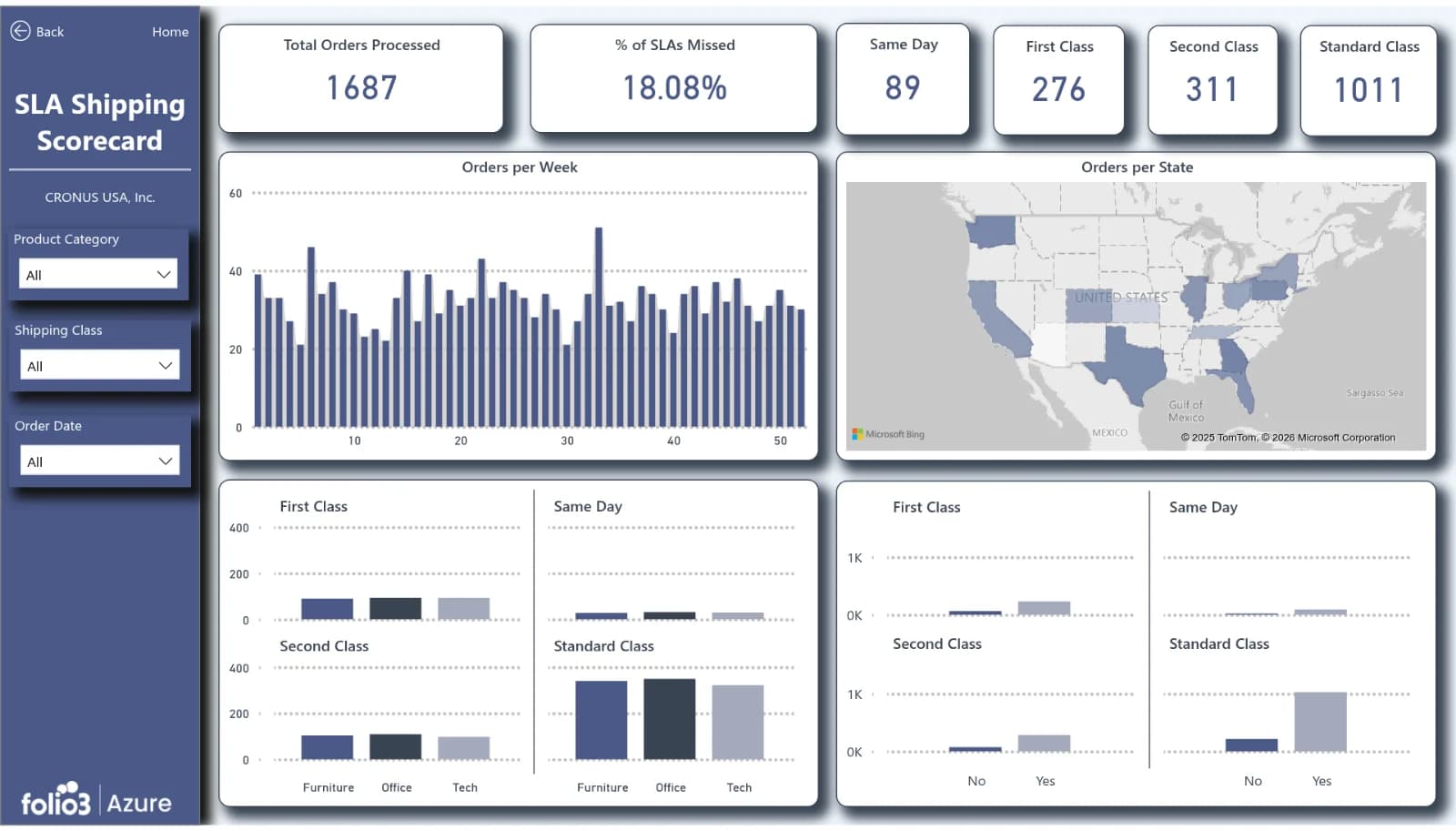
Example questions and dashboard visuals are illustrative.
Implementation Process
Our Microsoft Fabric Data Agent Implementation Process
1
Discover
Define business goals, user roles, priority questions, source systems, target outcomes, and deployment requirements.
2
Prepare
Assess data quality, Fabric sources, semantic models, business definitions, permissions, governance, and readiness.
3
Build
Configure the Data Agent, connect approved sources, create instructions, establish business context, and design the user experience.
4
Validate
Test business questions, answer logic, calculations, filters, security, terminology, and stakeholder acceptance.
5
Deploy
Publish the Data Agent to Microsoft Fabric, Foundry, Copilot Studio, Teams, Microsoft 365 Copilot, Power Apps, or a custom application.
6
Optimize
Monitor usage, improve answer quality, update business context, add sources, and scale governance as adoption grows.
Grounded Compliance Agent for Controlled Documents
Saudi petrochemical producer
A multi-agent assistant answers document questions in plain language from approved SharePoint content with citations and produces on-demand status reports.
Microsoft Fabric Data Agents are AI-powered conversational experiences that let authorized users ask natural-language questions about approved Microsoft Fabric data sources. They can use Power BI semantic models, Lakehouses, Warehouses, and KQL databases to provide responses based on governed enterprise data.
Microsoft Fabric Data Agent implementation services typically include readiness assessment, use-case discovery, data-source and Power BI semantic-model preparation, business context and agent instructions, security and permission validation, answer-quality testing, deployment to Fabric, Microsoft Foundry, Copilot Studio, Teams, or a custom application, and ongoing optimization. Folio3 scopes each engagement around your data, users, and priority business questions.
AI Data Agents in Microsoft Fabric connect to approved sources, use semantic-model context and agent instructions to interpret business questions, apply a user’s data permissions, and return natural-language answers based on governed enterprise information.
Yes. Fabric Data Agents can use Power BI semantic models as data sources. Semantic models can contain governed measures, relationships, metadata, and business definitions that help agents interpret questions and provide relevant answers.
They can be implemented around the permissions applied to underlying Fabric sources. A secure implementation should include identity configuration, role-based access, source permissions, row-level and column-level security validation, data boundaries, and governance controls.
Yes, provided the underlying data source and access model are correctly configured. Folio3 validates role-based data access, source permissions, and security behavior during implementation and testing.
Yes. Microsoft Foundry can support AI agents that use Fabric Data Agents for enterprise data analysis. Folio3 can design the data, agent, identity, security, and deployment architecture required for this integration.
Yes. A Fabric Data Agent can be added to a custom Microsoft Copilot Studio agent as a connected agent, enabling the custom agent to use governed Fabric data to ground its responses.
You need a defined business use case, approved Fabric data sources, appropriate permissions, a well-structured semantic or data model, clear business definitions, and a prioritized list of business questions. Folio3 can assess readiness and define a practical pilot roadmap.
Folio3 creates business-question test libraries, validates responses against approved data and expected outputs, checks measures and filters, tests permissions by user role, identifies ambiguous terminology, and performs regression testing after relevant model or source changes.
Talk to an Azure engineer
Let's talk about your Azure project.
5,000+
Projects Deilvered
700+
Global Employees
1,000+
Companies Served
20+
Global Awards won
Book a Fabric Data Agent Implementation Assessment
Tell us about your Microsoft Fabric environment, priority business questions, and target users. Our team will assess your readiness and recommend the right implementation path, pilot scope, and deployment approach.